
Pay Online


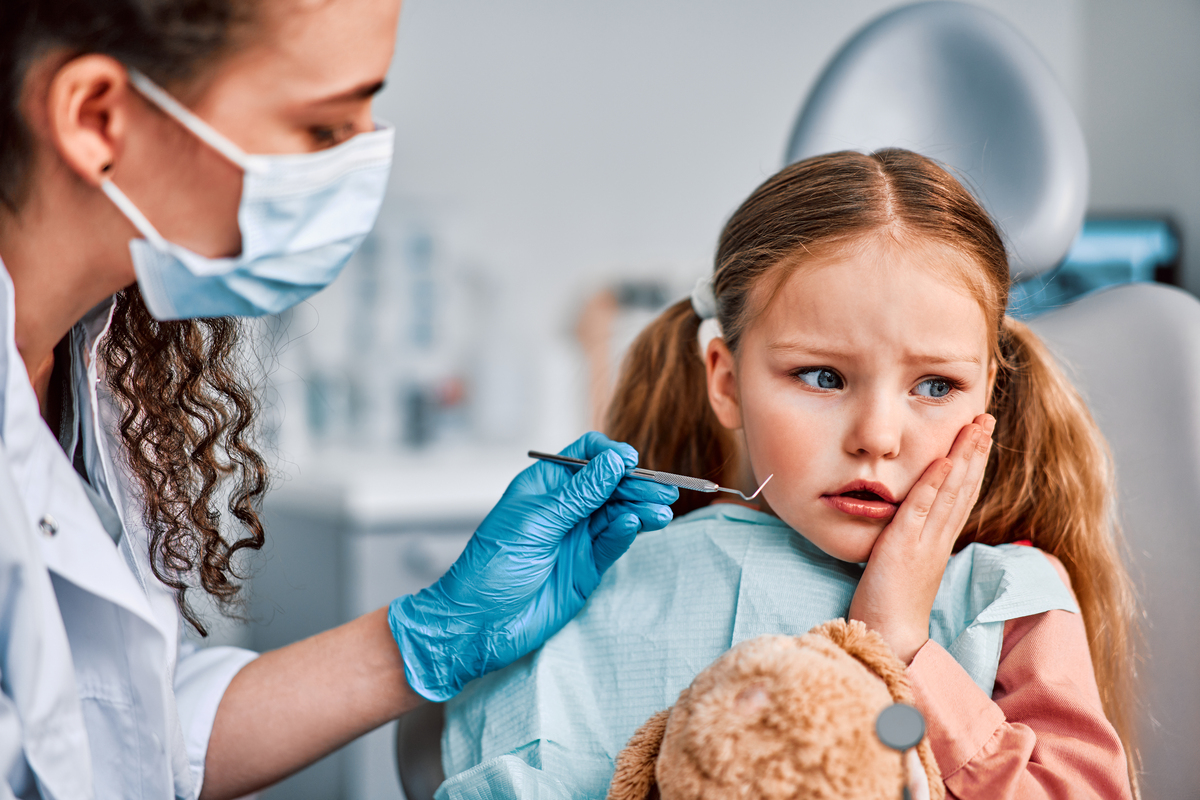
Most kids don’t love going to the dentist. And honestly, most parents don’t love watching their child squirm at the mention of a needle. For years, the conversation around childhood cavities has followed a predictable script: spot the decay, numb the area, drill, fill. That script, though, is changing, and for parents in Ripon, the change is happening right here in town.
Tooth decay is the most common chronic childhood disease in the United States, according to the CDC. Nearly half of children between the ages of 2 and 11 have had a cavity in a primary tooth. Those numbers are hard to ignore. But what’s equally important is that early-stage decay doesn’t always require a drill. There’s a newer, biomimetic approach now available that works with the tooth’s own biology to reverse the damage before it goes deeper. And yes, it’s available for children too.
What Makes This Treatment Different From a Traditional Cavity Filling?
The treatment at the center of this conversation is Curodont, and is offered as part of the practice’s preventive care services. It uses guided enamel regeneration – a process in which a peptide-based gel is applied directly to an early cavity and then works at a microscopic level to promote mineral deposition and rebuild the enamel from within. No drilling. No numbing shots. No removal of healthy tooth structure.
Traditional fillings require a dentist to physically remove the decayed material and fill the gap with composite resin or amalgam. That process is permanent – once enamel is removed, it doesn’t come back. Curodont works differently because it targets the decay before it reaches the point of no return. The treatment is designed for early-stage caries, meaning the cavity exists but hasn’t yet broken through the enamel to the point that drilling is required.
For children, this distinction matters enormously. Kids are more likely to experience dental anxiety, be more sensitive to discomfort, and be more prone to associating a bad dental visit with a lifelong fear of dental care. A treatment that removes the drill and the needle from the equation can change how a child feels about their oral health.
Is Curodont Safe and Effective for Kids?
This is usually the first thing parents want to know, and it’s a fair question. Curodont Repair Fluoride Plus is backed by Swiss biotechnology from vVardis, and the treatment has undergone rigorous clinical research and double lab testing for both safety and efficacy. The active ingredient is a self-assembling peptide – a naturally derived compound that binds to tooth mineral and promotes regeneration within the lesion.
The application is simple and gentle. The dentist applies the gel to the affected area of the tooth after a professional cleaning. There’s no injection, no local anesthesia required, and no recovery time. For most children, it feels no different from having a fluoride treatment, which many kids already receive at routine checkups.
However, if a cavity has already progressed past the enamel into the dentin, a traditional filling is likely still the appropriate treatment. Dr. Poppin’s team will assess the stage of decay carefully before recommending the right approach. The goal is always to preserve as much natural tooth structure as possible while ensuring the tooth heals properly.
What Are the Signs Your Child May Have an Early Cavity?
Not every cavity announces itself with pain. Early-stage decay can be silent. Here are signs worth watching for in your child’s teeth:
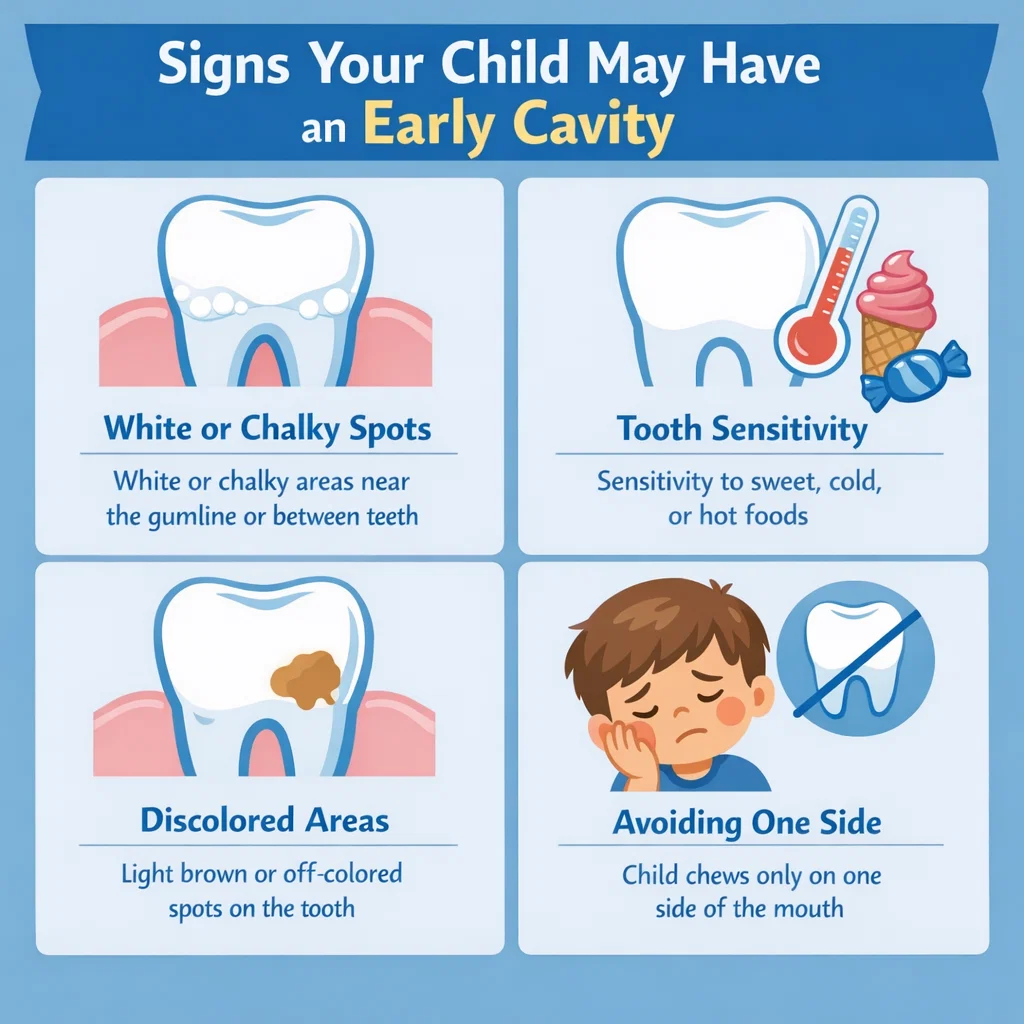
- White or chalky spots on the enamel, particularly near the gumline or between teeth
- Mild sensitivity when eating sweet, cold, or hot foods
- Visible light brown or off-colored areas on the tooth surface
- A tooth that your child avoids using when chewing
Catching decay at this stage is what makes the no-drill approach possible. This is one reason why regular dental checkups every six months are so valuable for children.
Protecting Your Child’s Smile Long-Term
No-shot, no-drill treatment is a meaningful improvement in how early decay is managed, but it works best as part of an extensive commitment to your child’s oral health. Curodont Protect, the preventive companion to Curodont Repair, can be applied at routine visits to strengthen enamel before decay even starts. Combined with good brushing habits, a balanced diet, and regular professional cleanings, it forms a solid defense.
Dental sealants are also worth discussing with Dr. Poppin. Sealants protect the grooves of the back teeth, where decay most often starts in children. Together with Curodont, they represent a genuinely proactive approach to keeping your child’s teeth healthy through the years when cavities are most likely to form.
The bottom line is this: early intervention changes outcomes. A cavity caught at the incipient stage and treated with guided enamel regeneration costs your child far less in terms of time, discomfort, and long-term dental health than one that progresses to the point of needing a filling, crown, or extraction.
Book a Visit for Your Child at Ryan J. Poppin, DDS Today
If your child is due for a checkup or if you’ve noticed any early signs of a cavity, this is a good time to schedule a visit at Ryan J. Poppin, DDS. The team will thoroughly assess your child’s teeth, let you know whether they’re a candidate for this treatment, and walk you through every option clearly and without pressure. New patients are always welcome, and the office is easy to reach at 201 S Wilma Avenue in Ripon.
Call us or request an appointment online.
People Also Ask
At what age can children start receiving Curodont treatment?
Curodont can be used on both primary (baby) teeth and permanent teeth, making it appropriate for young children, older kids, and adults. The key factor isn’t age, it’s the stage of the cavity. Dr. Poppin will evaluate the lesion during your child’s exam and determine whether the decay is early enough for guided enamel regeneration to be effective.
Does insurance cover no-drill cavity treatment?
Coverage for Curodont varies depending on your insurance plan. Some preventive and restorative procedures are covered, while newer biomimetic treatments may not yet be included in all plans. The team at Ryan J. Poppin, DDS, will review your insurance benefits and help you understand what’s covered before your child’s treatment begins. Financing options are also available if needed.
How many Curodont treatments does a child need?
Most early-stage cavities respond well to a single application, though some cases may benefit from a second treatment at a follow-up visit. After the initial treatment, Dr. Poppin will monitor the site at subsequent checkups to confirm that the enamel is mineralizing correctly. In some cases, Curodont Protect is applied as a maintenance step to strengthen the treated area and prevent recurrence.
What can parents do at home to support the results of Curodont treatment?
After a Curodont treatment, the goal is to support ongoing remineralization and avoid habits that accelerate new decay. That means brushing twice daily with a fluoride toothpaste, flossing once a day (especially between back teeth), limiting sugary drinks and sticky snacks between meals, and keeping up with biannual dental visits. Dr. Poppin’s team can also recommend specific products, such as fluoride mouth rinses or prescription-strength toothpaste, for children at higher risk of developing cavities.