Pay Online


You leave the chair, your mouth still numb, and suddenly every bite feels unfamiliar. You may wonder, “Is this pressure normal?” or “Why does my bite feel different?” These are common thoughts after a crown procedure.
It’s natural to feel a mix of relief and uncertainty. Your tooth has been restored, but your mouth needs time to adjust. Most post-treatment symptoms, like mild sensitivity or slight discomfort, are temporary and part of the healing process.
Understanding what happens next helps you stay confident and comfortable. Whether it’s managing sensitivity, adjusting your bite, or knowing what foods to avoid, a little guidance goes a long way. With the right care and expectations, your new restoration will begin to feel like a natural part of your smile sooner than you think.
What Happens After a Crown?
After getting dental crowns, your tooth has been strengthened and protected, but your body still needs time to adapt. Mild sensitivity, especially to hot or cold foods, is common during the first few days. This happens because the nerve inside the tooth may still be responding to recent work.
You may also notice that your bite feels slightly different. Even a well-placed crown can feel unusual at first because your mouth is adjusting to a new shape and surface. In some cases, a minor adjustment may be needed to make your bite feel balanced.
Most people find that comfort improves steadily within a few days. As your gums settle and your bite aligns naturally, the crown begins to feel more like your original tooth. Within a couple of weeks, many patients no longer notice it at all.
It’s important to remember that this transition period is normal. Your mouth is highly sensitive to changes, and even small differences can feel noticeable at first. Staying mindful of your symptoms and following basic aftercare steps will support a smooth adjustment and long-term success.
The First 24 Hours After Your Crown
The first day after your procedure plays a key role in how comfortable your recovery feels. As the numbness wears off, you may notice mild soreness or sensitivity. This is expected and usually fades quickly.
During this time, it’s best to wait until full sensation returns before eating. Biting your cheek or tongue is more likely when numbness is present. Once you regain feeling, start with soft foods that require minimal chewing.
If you have a temporary crown, extra caution is important. Temporary restorations are more delicate and can shift or loosen if exposed to sticky or hard foods. Avoid chewing gum, caramel, or crunchy snacks. Permanent dental crowns are more durable, but it’s still wise to ease back into your normal diet.
Stick to lukewarm foods and drinks. Extremely hot or cold items can trigger sensitivity early on. Staying hydrated also helps your mouth recover more comfortably.
Gentle brushing and careful flossing should continue, but avoid snapping floss between teeth. Slide it out to prevent dislodging the crown. Taking these small precautions during the first 24 hours can make a noticeable difference in your overall comfort.
Is It Normal to Feel Sensitivity or Discomfort?
Yes, mild sensitivity after a crown is very common. Your tooth has undergone preparation, which can temporarily irritate the nerve. You may notice sensitivity to hot, cold, or even sweet foods.
Gum soreness is also typical. The tissue around the tooth may feel tender for a few days, especially if there was any adjustment during placement. This should gradually improve as the area heals.
Some people feel slight pressure when biting. This is often due to minor inflammation or your bite adjusting to the new crown.
In most cases, these sensations fade within one to two weeks. If discomfort continues beyond that, it may indicate the need for a bite adjustment or further evaluation. Listening to your body helps you know what’s normal and when to seek guidance.
Adjusting to Your New Bite
A new crown can slightly change how your teeth come together. Even a tiny difference in height or shape can make your bite feel uneven at first.
Your mouth is highly sensitive to these changes. You may notice that one side feels higher or that chewing feels different. In many cases, your bite will settle naturally as your muscles adapt.
However, if the crown feels too high or causes discomfort when chewing, a quick adjustment can resolve the issue. Dentists can fine-tune the surface to restore balance and comfort.
Pay attention to persistent pressure or discomfort. Addressing bite concerns early prevents unnecessary strain on your tooth and surrounding structures.
Eating and Daily Habits After a Crown
Your diet plays a big role in how quickly you adjust. In the first few days, choose soft foods like yogurt, eggs, soups, or cooked vegetables. These are easier on your teeth and reduce pressure on the crown.
Avoid hard, sticky, or crunchy foods that can stress the restoration. Items like nuts, ice, and chewy candies should be limited, especially early on.
Chew on the opposite side of your mouth when possible. This helps reduce pressure while your tooth settles.
Good hydration supports healing and keeps your mouth comfortable. Continue brushing twice daily and flossing carefully around the crown to maintain cleanliness.
Building these habits early helps protect your restoration and ensures long-term success.
How Long Does It Take to Feel Normal?
Recovery after a crown is usually quick and predictable.
- 24-48 hours: Mild sensitivity and slight discomfort are most noticeable.
- 1 week: Most symptoms improve significantly. Chewing becomes easier.
- 2-3 weeks: The crown feels natural, and sensitivity typically disappears.
Everyone heals differently, but most people adjust without complications. Staying consistent with aftercare helps speed up the process.
Signs Something May Not Be Right
While most recoveries are smooth, certain symptoms should not be ignored.
Sharp pain when biting may indicate that the crown is too high or not aligned properly. Persistent sensitivity beyond a few weeks could suggest nerve irritation or underlying issues.
A loose or shifting crown is another concern. This may affect how well the tooth is protected. Swelling, redness, or ongoing gum irritation should also be evaluated.
If you notice any of these signs, it’s important to schedule a follow-up visit. Early attention helps prevent more complex problems and keeps your restoration functioning properly.
How to Care for Your Dental Crown Long-Term
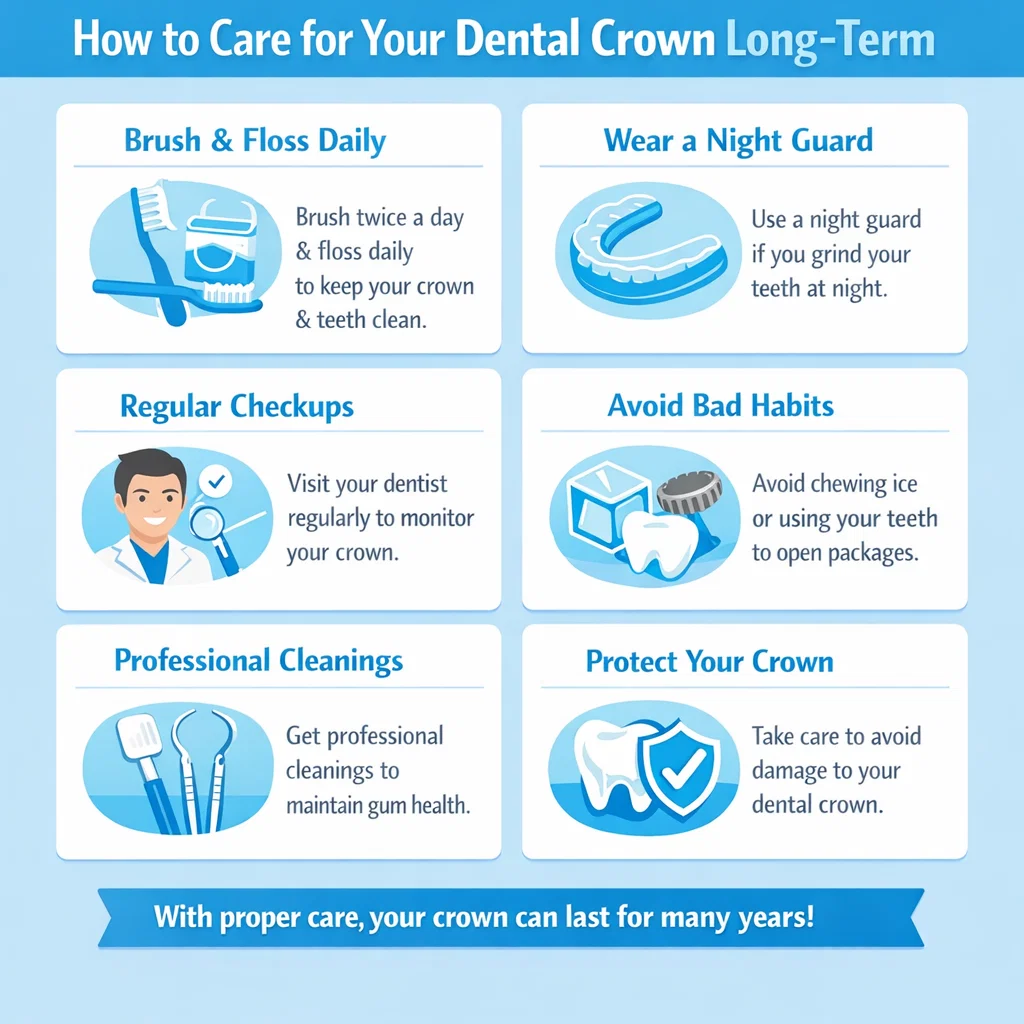
Long-term success depends on consistent care. Brush twice daily using a soft-bristled toothbrush and non-abrasive toothpaste. This helps protect both the crown and surrounding teeth.
Floss daily to remove plaque around the gumline. Be gentle and guide the floss out instead of snapping it upward.
If you grind your teeth at night, a custom night guard can prevent unnecessary wear. Grinding places pressure on restorations and may shorten their lifespan.
Regular checkups allow your provider to monitor the dental crowns in Ripon and ensure everything remains stable. Professional cleanings also help maintain gum health around the tooth.
Avoid habits like chewing ice or using your teeth to open packages. These actions can weaken or damage the crown over time.
With proper care, your restoration can last for many years while maintaining comfort and function.
Common Mistakes to Avoid After a Crown
Small habits can impact how well your crown performs. Chewing ice or hard foods can create stress and lead to damage.
Skipping flossing allows plaque to build up around the crown, increasing the risk of gum issues. Ignoring discomfort when biting may allow minor issues to become more serious.
Delaying follow-up visits can also affect long-term outcomes. Even if symptoms seem minor, early adjustments are simple and effective.
Being mindful of these habits helps protect your investment and supports lasting oral health.
Benefits You’ll Notice Over Time
As your mouth adjusts, the benefits become clear. Chewing feels more balanced and comfortable, especially if the tooth was previously damaged.
The crown restores strength, allowing you to bite and eat with confidence again. It also improves the appearance of your smile by blending naturally with surrounding teeth.
Over time, you may forget the crown is even there. It becomes part of your daily function, supporting both aesthetics and oral health.
Most importantly, it protects the underlying tooth from further damage. This added protection helps preserve your natural structure and prevents future complications.
Adjusting to a crown is a process, but it’s usually smooth and predictable. Mild sensitivity, slight pressure, or bite changes are all part of the transition.
As days pass, your comfort improves and your confidence returns. Paying attention to your symptoms and following simple care steps makes a meaningful difference.
If something feels off, it’s always better to have it checked early. A quick visit can ensure everything is functioning as it should.
At Ryan J. Poppin, DDS, patients across Ripon and nearby areas receive thoughtful guidance and care throughout every step. If you have questions or want to ensure your crown feels just right, scheduling a visit is a simple next step toward lasting comfort.
What People Ask
How long does it take to adjust to a crown?
Most people adjust within one to two weeks. Your bite and surrounding tissues gradually adapt, making the crown feel natural and comfortable during daily activities.
Can I eat normally after getting a crown?
You can return to normal eating once numbness fades, but start with softer foods. Gradually reintroduce harder textures as your comfort improves over the next few days.
Is temperature sensitivity normal after a crown?
Yes, temporary sensitivity to hot or cold is common. It usually decreases as the nerve settles and the tooth adapts to the new restoration.
Can a crowned tooth still develop problems?
While the crown protects the tooth, the underlying structure can still be affected by decay or gum issues. Maintaining good hygiene helps prevent complications around the crown.
Should I floss around a crown?
Yes, flossing is essential to keep the area clean. Use gentle techniques to avoid placing unnecessary pressure on the crown while still removing plaque effectively.