
Pay Online



You’re brushing your teeth like any other morning, and then you notice it. A faint pink tint in the sink. It might not hurt, and it might stop quickly, so it’s easy to brush it off and move on with your day. Many people in Ripon and nearby communities have experienced this at some point, especially after changing their routine or trying a new floss.
Still, bleeding gums are not something to ignore for long. There’s a difference between occasional irritation and a sign that your gums need attention. In some cases, early intervention, including options like periodontal disease therapy, can make a significant difference.
This blog walks you through what causes bleeding gums, when it’s worth paying closer attention, and how to protect your long-term oral health.
Is It Normal for Gums to Bleed?
The short answer is yes, sometimes. But it depends on the situation.
Mild gum bleeding can happen when you introduce flossing after a long gap. Your gums may feel sensitive as they adjust to the new habit. Similarly, brushing too hard or using a firm-bristled toothbrush can irritate the gum tissue. In these cases, the bleeding is usually temporary and improves within a few days as your technique becomes gentler and more consistent.
However, not all bleeding falls into this category. When gums bleed regularly, even with light brushing or flossing, it often signals something deeper. Healthy gums are typically firm, pink, and resistant to bleeding. If they react frequently, it may indicate inflammation beneath the surface.
The key distinction lies in duration and consistency. Occasional bleeding that resolves quickly is usually linked to surface irritation. Persistent or recurring bleeding points toward an underlying issue, often related to plaque buildup along the gumline.
For many patients, this is the first visible sign that their gums need professional attention. Addressing it early can help prevent more advanced problems that require more involved care.
Common Causes of Bleeding Gums
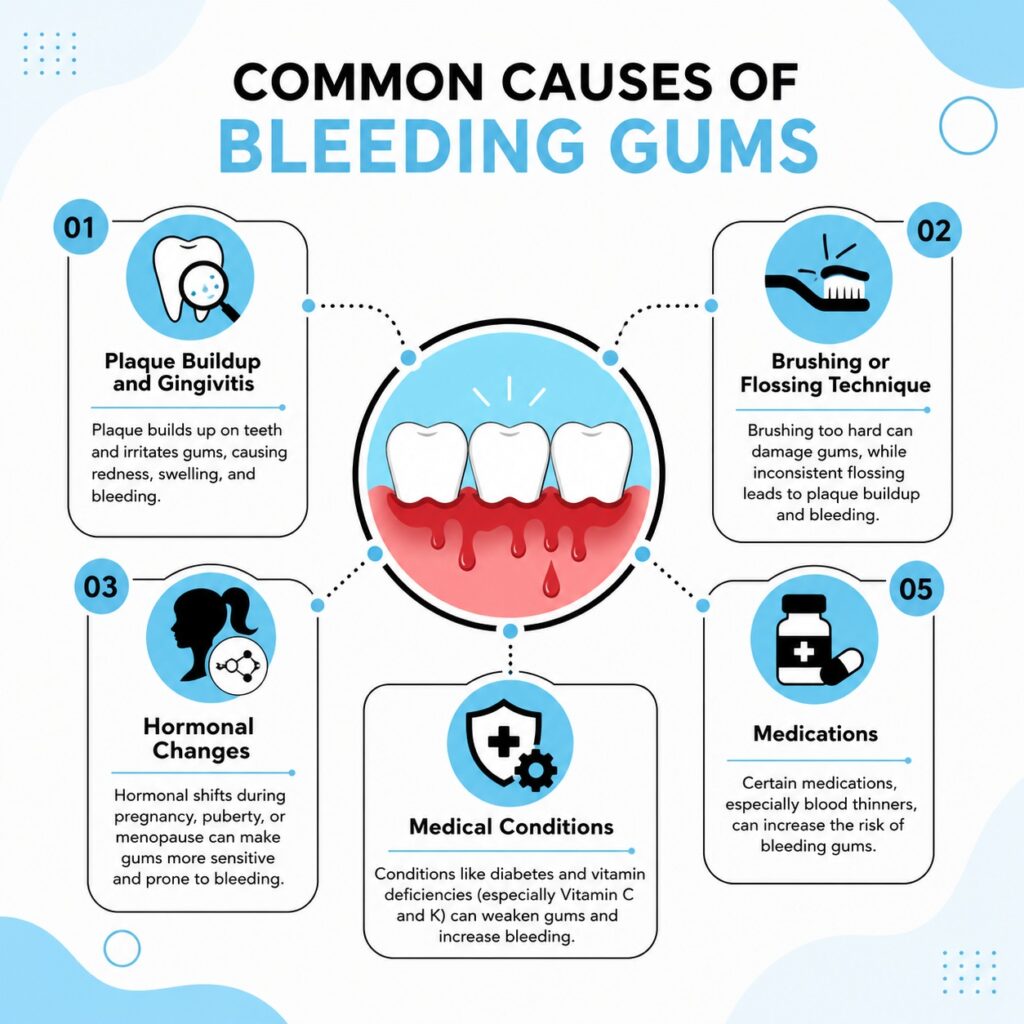
Plaque Buildup and Gingivitis
The most common reason for bleeding gums is plaque accumulation. This sticky film of bacteria forms on teeth daily. When not removed effectively, it irritates the gums, leading to gingivitis. This early stage of gum inflammation often shows up as redness, swelling, and bleeding during brushing or flossing.
Brushing or Flossing Technique
Technique matters more than force. Brushing too aggressively can wear down gum tissue over time. On the other hand, inconsistent flossing allows plaque to settle between teeth. When you begin flossing again, the gums may bleed due to inflammation already present.
Hormonal Changes
Hormonal shifts can make gums more sensitive and prone to bleeding. This is common during pregnancy, puberty, or menopause. These changes affect how gum tissue responds to plaque, increasing the likelihood of irritation even with normal oral hygiene.
Medical Conditions
Certain health conditions can influence gum health. Diabetes, for example, can affect the body’s ability to fight infection, including in the gums. Vitamin deficiencies, especially Vitamin C and K, can also contribute to bleeding. These factors often require both dental and medical attention.
Medications
Some medications, particularly blood thinners, can increase the tendency to bleed. While they serve important health purposes, they may make minor gum irritation more noticeable. If you suspect this connection, it’s worth discussing with both your physician and dental provider.
Understanding these causes helps clarify that bleeding gums are rarely random. They usually point to a manageable issue that benefits from early care.
Warning Signs You Should Not Ignore
At first, bleeding gums may seem minor. But certain patterns deserve closer attention.
If the bleeding continues for more than a few days, it’s no longer just temporary irritation. Swelling, tenderness, or a change in gum color often follow. Gums may appear darker or feel soft to the touch. These are signs that inflammation is progressing.
Persistent bad breath is another indicator. When bacteria accumulate below the gumline, they release compounds that cause odor that brushing alone cannot fix. This is often overlooked but can signal deeper gum involvement.
Gum recession is another concern. If your teeth begin to look longer or you notice sensitivity near the roots, it may indicate that the gums are pulling away. Over time, this can expose more vulnerable areas of the tooth.
In more advanced cases, teeth may feel slightly loose or shift in position. This is a sign that the supporting structures are being affected.
These symptoms are not meant to alarm but to inform. Recognizing them early allows for more straightforward treatment and better outcomes.
When Should You See a Dentist?
It’s best not to wait too long when symptoms persist. A good rule of thumb is to seek evaluation if bleeding continues beyond one week, especially with consistent oral hygiene.
Pain or discomfort is another clear signal. Healthy gums should not hurt during normal brushing or flossing. If they do, it’s time to have them checked.
Visible changes also matter. Redness, swelling, or receding gumlines should not be ignored. These changes often develop gradually, making them easy to overlook until they become more noticeable.
Early diagnosis plays a key role in preventing progression. In many cases, what starts as mild inflammation can be managed with conservative care when addressed promptly. Waiting allows the condition to advance, making treatment more complex.
Patients in Ripon often benefit from routine exams that include gum health assessments. These visits help identify concerns before they become disruptive, keeping treatment simple and effective.
What Happens If Bleeding Gums Are Left Untreated?
Ignoring bleeding gums allows inflammation to continue beneath the surface. What begins as gingivitis can progress into periodontitis, a more advanced stage that affects the supporting bone.
As bacteria move deeper below the gumline, they begin to damage the structures that hold teeth in place. This can lead to bone loss over time. Once bone support is reduced, teeth may become unstable.
This progression does not always cause pain in the early stages, which is why it can go unnoticed. However, the effects are cumulative. The longer it continues, the more difficult it becomes to reverse.
Eventually, untreated gum disease can lead to tooth loss. It can also affect overall oral function, making eating and speaking less comfortable.
The important takeaway is that this progression is preventable. Early care, including targeted approaches like periodontal disease therapy, can help stop the condition before it reaches advanced stages.
How Dentists Diagnose and Treat Bleeding Gums
A dental visit for bleeding gums is straightforward and informative. The process typically begins with a visual examination of the gums. Your provider will look for signs of inflammation, redness, and recession.
Next, they may measure the depth of the spaces between your teeth and gums. These measurements help determine whether bacteria have moved below the surface. In some cases, X-rays are used to assess bone levels and detect any underlying changes.
Treatment depends on the stage of the condition. For early cases, a professional cleaning can remove plaque and tartar buildup, allowing the gums to heal.
If the condition is more advanced, a deeper cleaning known as scaling and root planing may be recommended. This process removes bacteria from below the gumline and smooths the root surfaces to support healing.
Ongoing maintenance is equally important. Regular follow-ups help ensure that the gums remain stable and healthy over time.
How to Prevent Bleeding Gums at Home
Preventing gum issues starts with consistent daily habits:
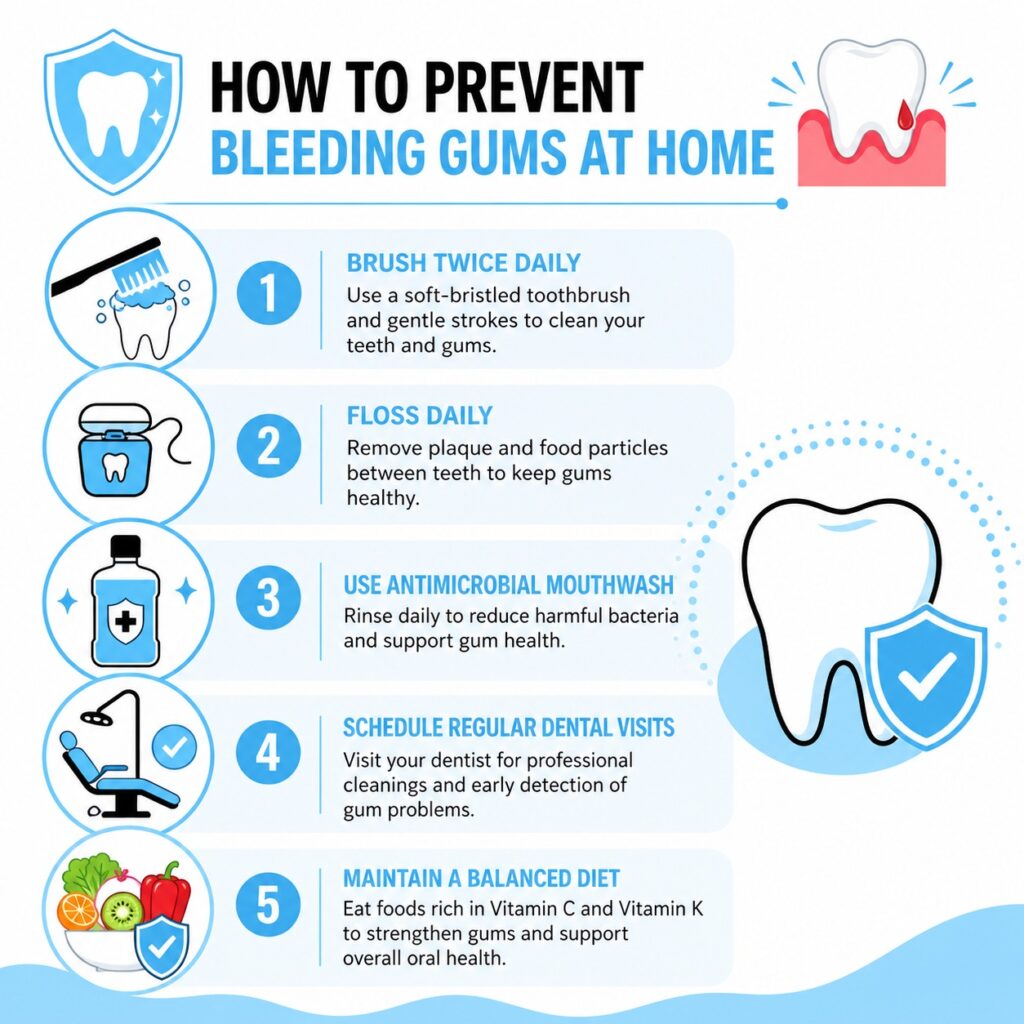
- Brush twice daily using a soft-bristled toothbrush and gentle strokes
- Floss daily to remove plaque between teeth
- Use an antimicrobial mouthwash to reduce bacteria
- Schedule regular dental visits for professional cleanings
- Maintain a balanced diet rich in Vitamin C and Vitamin K
These steps work together to keep plaque under control and support gum health.
Consistency matters more than intensity. Gentle, regular care is more effective than occasional aggressive cleaning. Over time, these habits help maintain a healthy environment where gums can stay firm and resilient.
Simple Daily Habits That Make a Difference
Small changes can have a lasting impact on your oral health.
Replace your toothbrush every three to four months, or sooner if the bristles wear out. Worn bristles are less effective and can irritate the gums.
Staying hydrated supports saliva production, which helps wash away bacteria. Dry mouth can increase the risk of plaque buildup.
Avoid tobacco products, as they can impair gum healing and increase the risk of disease progression.
Pay attention to changes in your gums. If something feels different, it’s worth noting and discussing during your next visit.
These everyday actions create a strong foundation for long-term gum health.
Bleeding gums are often the body’s way of signaling that something needs attention. While occasional irritation can happen, persistent symptoms should not be overlooked. Acting early makes treatment simpler and more effective.
If you’ve noticed changes in your gums, a professional evaluation can provide clarity and peace of mind. At Ryan J. Poppin, DDS, patients in Ripon and surrounding areas receive thorough assessments focused on long-term oral health.
A simple visit can help you understand what’s happening and what steps to take next. If symptoms continue, consider scheduling an exam to keep your smile healthy and stable.
What People Ask
Why do gums bleed when flossing after a long break?
Gums may bleed when flossing resumes after a gap because inflammation has already developed. Regular flossing usually reduces bleeding within a few days as the tissue heals.
How long is too long for gums to keep bleeding?
Bleeding that lasts more than a week, even with consistent brushing and flossing, should be evaluated. Ongoing symptoms often indicate a deeper issue that requires attention.
What vitamin deficiency can cause bleeding gums?
Low levels of Vitamin C or Vitamin K can affect gum health. These nutrients support tissue repair and blood clotting, making them important for maintaining healthy gums.
Can stress affect gum health and cause bleeding?
Yes, stress can weaken the immune response, making gums more vulnerable to inflammation. It may also lead to neglected oral hygiene habits, increasing the risk of bleeding.
Is it safe to brush if gums are bleeding?
Yes, but brushing should be gentle, using a soft-bristled toothbrush. Avoiding brushing can worsen plaque buildup and increase inflammation over time.