Pay Online


If you live in Salida and want a brighter, more even smile, porcelain veneers may have crossed your mind. Understanding what porcelain veneers fix and what they cannot in Salida helps you make a truly informed decision. Veneers are a popular cosmetic option, but they are not a one-size-fits-all solution. Knowing the difference sets realistic expectations before your consultation.
What Are Porcelain Veneers?
Porcelain veneers are thin, custom-made shells bonded to the front surface of your teeth. Each shell is crafted from dental-grade porcelain designed to mimic the look of natural enamel. They are permanently attached, which means the process involves some irreversible enamel removal. Once placed, veneers can dramatically transform your smile’s appearance.
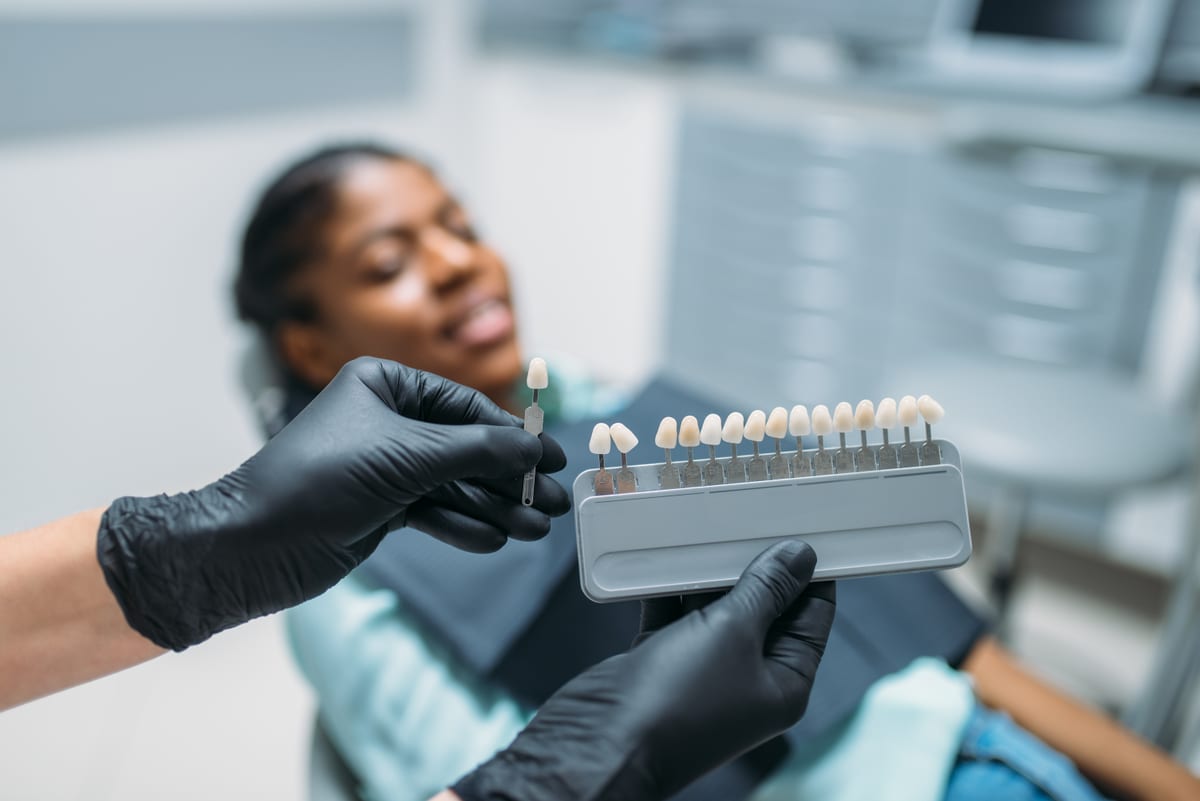
Our dental team carefully designs each veneer to match your tooth shape, color, and bite. The porcelain material resists staining better than natural enamel in many cases. It also reflects light in a way that looks remarkably natural. Patients in Salida often choose veneers because the results are both long-lasting and visually striking.
Veneers typically cover only the visible front surface of a tooth. They do not wrap around the entire tooth like a crown does. This makes them a more conservative option when the underlying tooth structure is still healthy and intact.
What Porcelain Veneers Can Fix in Salida
Veneers address a wide range of cosmetic concerns effectively. Many patients are surprised by how many problems a single treatment can correct. Here is a list of issues that porcelain veneers commonly fix:
- Discoloration or deep staining — including stains from tetracycline antibiotics or fluorosis that whitening cannot remove
- Chipped or cracked teeth — minor chips and surface cracks are easily concealed
- Gaps between teeth — small to moderate spaces can be closed without orthodontic treatment
- Uneven or misshapen teeth — teeth that appear too small, too pointy, or irregular in shape
- Mild misalignment — slightly crooked teeth can appear straighter with properly shaped veneers
- Worn enamel — teeth that look short due to grinding or acid erosion can be restored in appearance
Veneers work especially well for patients whose cosmetic concerns affect multiple teeth at once. Rather than treating each issue separately, one veneer placement session can address several problems together. This efficiency makes veneers a cost-effective cosmetic investment for many Salida patients.
What Porcelain Veneers Cannot Fix
Veneers are powerful cosmetic tools, but they have clear limitations. Understanding these boundaries is just as important as knowing their benefits. Choosing veneers when another treatment is more appropriate can lead to disappointment or further dental problems.
Veneers do not treat active tooth decay or gum disease. Any underlying health issues must be resolved before veneer placement begins. Applying veneers over a compromised tooth would only mask a problem that will worsen over time.
Here are common situations where veneers are not the right solution:
- Severely decayed teeth — decay must be removed and treated with a filling or crown first
- Significant misalignment — moderate to severe crowding or bite problems require orthodontic treatment like Invisalign
- Weakened or broken tooth structure — a Dental Inlays Onlays or crown may offer stronger structural support
- Missing teeth — veneers only cover existing teeth; Dental Implants are needed to replace missing ones
- Teeth grinding (bruxism) — untreated grinding can fracture or dislodge veneers prematurely
- Insufficient enamel — veneers need healthy enamel to bond to; thin or absent enamel may disqualify a patient
Our dental team will carefully evaluate your oral health before recommending veneers. If another treatment better suits your needs, we will explain all available options. The goal is always the healthiest and most lasting outcome for your smile.
Who Makes a Good Candidate for Veneers?
The ideal veneer candidate has healthy teeth and gums with no active disease. They want to correct cosmetic imperfections rather than structural or functional problems. Candidates should also be committed to good oral hygiene after placement. Well-maintained veneers can last ten to fifteen years or longer.
Patients in Salida who grind their teeth at night may still qualify for veneers if they wear a nightguard consistently. Those with very thin enamel may not bond well with the porcelain shells. A thorough examination and dental X-rays help our dental team determine your candidacy accurately.
Age also plays a role. Teenagers whose teeth are still developing are generally not ideal candidates. Adults with fully matured teeth and stable oral health tend to get the best and longest-lasting results from this treatment.
The Veneer Process: What to Expect
Getting veneers typically involves two to three appointments. During the first visit, our dental team evaluates your smile and discusses your goals. We take impressions or digital scans to create a custom design that fits your face and bite.
At the second appointment, a thin layer of enamel is gently removed from each tooth receiving a veneer. This step makes room for the shell to sit flush with surrounding teeth. Temporary veneers are often placed while your permanent ones are crafted at a dental lab.
When your final veneers are ready, they are bonded securely to your teeth using a special dental cement. Our dental team checks the fit, color, and bite carefully before finalizing placement. Most patients leave this appointment with a dramatically transformed smile. Aftercare is straightforward — brush, floss, and visit us regularly for checkups.
Frequently Asked Questions
How long do porcelain veneers last?
With proper care, porcelain veneers typically last between ten and fifteen years. Regular dental checkups, good brushing habits, and avoiding hard foods help extend their lifespan. Patients who grind their teeth should wear a nightguard to protect their veneers from premature damage.
Do porcelain veneers look natural?
Yes, porcelain veneers are designed to closely mimic the appearance of natural tooth enamel. The material reflects light in a realistic way and can be shade-matched to blend with surrounding teeth. Most people cannot tell the difference between a veneer and a natural tooth.
Does getting veneers hurt?
The veneer process is generally well-tolerated and minimally uncomfortable. Local anesthesia is used during enamel preparation to keep you comfortable throughout. Some patients experience mild sensitivity for a few days after placement, but this typically fades quickly.
Can veneers be whitened if they stain?
Porcelain veneers resist staining much better than natural enamel, but they cannot be whitened with traditional bleaching products. If your veneers discolor significantly over time, replacement may be necessary. To keep them bright, limit coffee, tea, and red wine, and avoid tobacco products.
What happens if a veneer chips or breaks?
A chipped or broken veneer should be evaluated by our dental team as soon as possible. In some cases, a minor chip can be smoothed or repaired. Severely damaged veneers typically require replacement since they cannot be reattached once fractured.
Salida patients curious about whether veneers are the right choice for their smile deserve clear, honest guidance. Our dental team is committed to helping you understand every option before moving forward with any treatment. Book Now to schedule your appointment with our team.